

For your first trip to Taipei, plan 4 to 5 days will be the best. Outdoors, hike Elephant Mountain, ride the Maokong Gondola to the tea houses, eat at Raohe Night Market or take a day trip to Jiufen. Indoors, prioritize the National Palace Museum, a traditional Taiwanese breakfast, a hot spring in Beitou and a night of KTV.
Taipei is one of the easiest cities in Asia for a first trip. The MRT is clean and signposted in English, food is cheap, and the mountains start right where the city ends. I’m based in Taipei, so this is the list I’d give a friend visiting for the first time, including the places I think are overhyped and how to do them better.
I’ve split it into 8 outdoor and 8 indoor things to do, so you can mix active days with slower ones and swap things around depending on your energy.
8 Outdoor Things to Do in Taipei

1. Hike Elephant Mountain for the Taipei 101 view
Elephant Mountain (象山, Xiangshan) is the short, steep climb that gives you the postcard shot of Taipei 101. From Xiangshan MRT Station (Exit 2, end of the red line) it’s about 10 minutes on foot to the trailhead, then mostly stairs. Plan for around 1.5 hours return. It’s free.
Be realistic about what it is: a staircase with a view, not a nature hike. The first viewing platform gets packed with tripods around sunset, so keep climbing to the Six Giant Rocks near the top, where there’s more space and a cleaner angle on the skyline.

2. Ride the Maokong Gondola to the tea hills
The Maokong Gondola (貓空纜車) runs about 4 km from Taipei Zoo up to Maokong, an old Tieguanyin tea-growing area in the southern hills. A single ride costs NT$180 and a day pass costs NT$300, so if you’re riding up and back down, the day pass is the cheaper option. The glass-floor crystal cabin adds NT$50 per ride, and gondola ticket holders can also ride the Maokong Left and Right Line buses at the top for free.
The mistake most first-timers make is staying near the top station, which is mostly snack stalls. Walk 10 to 15 minutes along the road to one of the tea houses with a terrace, order a pot of local Tieguanyin and give yourself an hour.
The gondola runs Tuesday to Sunday, 9am to 9pm and may close due to the weather.

3. Walk Xiaoyoukeng and Qixingshan in Yangmingshan
Yangmingshan National Park (陽明山國家公園) sits on Taipei’s northern edge and shows you the city’s volcanic side. Start at Xiaoyoukeng, a steaming fumarole area with a short boardwalk, then decide if you want the climb up Qixingshan (1,120 m), the highest point in Taipei City. From Xiaoyoukeng it’s the shorter but steeper route up.
If your trip falls between October and November, you’ll catch silver grass season, when the slopes around Xiaoyoukeng and Qingtiangang turn silver and, in some spots, slightly red from the volcanic soil. Buses run up from Jiantan MRT. Don’t treat this as a quick stop: if you only have time for the boardwalk, the bus ride will take longer than the visit, so give it a full morning.

4. Explore Dihua Street and Dadaocheng
Dadaocheng (大稻埕) is Taipei’s old trading district on the Tamsui River, and Dihua Street (迪化街) is its main road, lined with Baroque-style shophouse facades, dried goods shops, herbal medicine stores and tea merchants.
If dried mushrooms and herbs aren’t your thing, the shops at street level won’t hold you for long. The real reason to come is the buildings: many shophouses now hide cafes, design stores and small galleries on the upper floors or in the back courtyards. Wander in rather than just walking past. Finish at Dadaocheng Wharf, where you can grab a drink by the river or rent a YouBike for the riverside cycle path.

5. Eat your way through Raohe Night Market
You can’t skip a night market, but you can pick a better one. Shilin (士林) is the biggest and most famous, and also the most spread out and tourist-focused. Raohe is a single straight lane next to Songshan MRT, easy to walk end to end in an hour, with the food packed tightly together.
What to try at Raohe:
- Pepper pork buns – baked against the walls of a clay oven, crispy outside with peppery pork and scallions inside. The famous stall is right at the entrance by Ciyou Temple, so you can’t miss the queue.
- Medicinal herb pork rib soup – dark, herbal broth that tastes better than it looks.
- Stinky tofu – try the fried version first. If you like it, move on to the mala hot pot version.
- Fresh fruit juice – papaya milk or watermelon juice to cool down between bites.

6. Spend an afternoon in Tamsui
Tamsui (淡水) sits at the end of the red MRT line, where the river meets the sea. Go for Fort San Domingo, a red-brick fort that has passed through Spanish, Dutch and British hands, and for the long riverside promenade.
Tamsui Old Street is mostly the same snack stalls you’ll find everywhere else, so don’t spend your time there. Walk the waterfront instead, or take the short ferry across the river to Bali, where you can rent a bike and ride along the opposite bank. Go mid-afternoon and stay for dinner by the water.

7. Take a day trip to Jiufen
Jiufen (九份) is a former gold-mining town on a hillside above the northeast coast, known for red lanterns, steep stairways and tea houses with sea views. Keelung Bus 1062 runs directly from near Zhongxiao Fuxing MRT and takes 60 to 90 minutes. You can also take the train to Ruifang and switch to a local bus for the last 15 minutes.
Timing matters more here than anywhere else on this list. Tour groups arrive between about 1pm and 4pm, and Jishan Street, the main lane, becomes shoulder-to-shoulder. Arrive around 9:30 to 10am, or after 6pm when the lanterns are lit and the day-trippers have left, and go Tuesday to Thursday if you can. One more thing: Studio Ghibli has denied the long-running claim that Spirited Away was modeled on Jiufen, so come for the town itself, not a film set. If you have time, take the 1062 one stop further to Jinguashi for the old gold mine.

8. Watch the honor guard at Chiang Kai-shek Memorial Hall
Chiang Kai-shek Memorial Hall (中正紀念堂) is free and right on top of the MRT station of the same name (red and green lines). The big white hall, the Liberty Square gate and the National Theater and Concert Hall make up one of Taipei’s largest public squares.
If you’ve read older guides, note the change: since July 2024, the honor guard no longer stands inside under the statue. The drills now happen outside on Democracy Boulevard, with a patrol around the hall every hour from 9am to 5pm. The hall itself is debated in Taiwan because of Chiang’s authoritarian rule, and the permanent exhibition inside on Taiwan’s path to freedom of speech gives you useful context for that conversation. It’s worth 20 minutes of your visit.
8 Indoor Things to Do in Taipei

9. Go up Taipei 101 (or decide you don’t need to)
The observatory ticket is NT$600 at the counter, and it’s usually cheaper if you book the ticket online with a time slot. It covers the indoor observatory on the 89th floor, the outdoor deck on the 91st, and the 660-ton golden damper ball that keeps the tower steady in typhoons and earthquakes.
Here’s my honest take: the best view in Taipei is of Taipei 101, not from it. If you’ve already done Elephant Mountain, only go up if the engineering story and the damper interest you, or you want the wide view across the basin to the mountains. Otherwise, that NT$600 buys you two Maokong gondola rides and a pot of tea.

10. See the Taipei Palace Museum
Taipei Palace Museum (國立故宮博物院) holds roughly 700,000 objects from the Chinese imperial collection that once filled Beijing’s Forbidden City, but only a few thousand are on display at any time. Tickets are NT$350, and it’s open Tuesday to Sunday, 9am to 5pm. There’s no MRT stop at the door, so take the MRT to Shilin and a short bus ride up, or a taxi.
Two things nobody tells you. First, the famous Jadeite Cabbage and Meat-shaped Stone rotate between this museum and the southern branch in Chiayi, so check the current exhibitions page before you go just for them. Second, don’t try to see everything. Two focused hours in one or two galleries is far better than a tired march through all four floors. For lunch, the Silks Palace restaurant on site serves beef noodle soup in a bowl shaped like one of the museum’s bronze vessels.

11. Make your own pineapple cakes in Shilin
Kuo Yuan Ye (郭元益), a bakery founded in 1867, runs a pineapple cake class at its Museum of Cake and Pastry, a 5-minute walk from Shilin MRT Exit 1. The class takes just under two hours on the 4th floor, and you leave with a box of cakes you shaped and filled yourself. You can book the pineapple cake class online for around US$20, with English sessions available.
Keep your expectations right: the filling comes pre-made, so it’s more of a guided assembly than a baking course. It’s still a fun, hands-on way to spend two hours, and it sits close enough to the Taipei Palace Museum to do both on the same day.
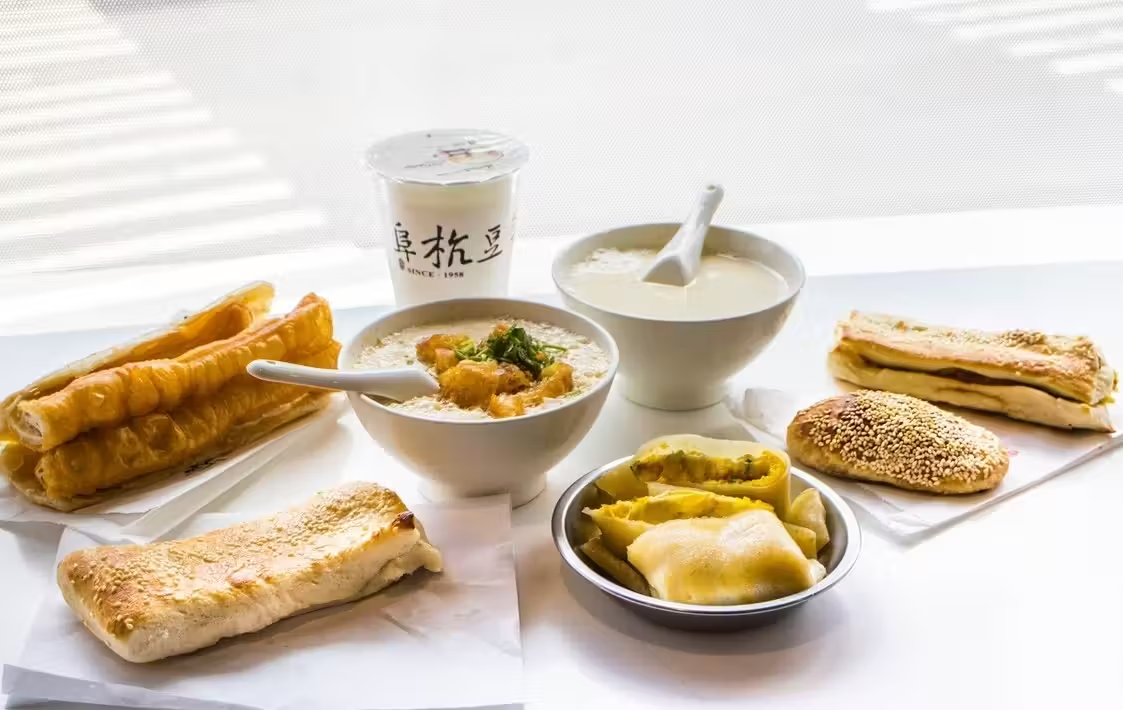
12. Have a traditional breakfast at Fuhang Soy Milk
Fuhang Soy Milk (阜杭豆漿) is Taipei’s most famous breakfast shop, on the 2nd floor of Huashan Market, right outside Shandao Temple MRT Exit 5.
It opens Tuesday to Sunday from 5:30am to 12:30pm, and since getting a Michelin Bib Gourmand nod in 2018, the line regularly runs down the stairs and along the street. A 45-minute wait is normal, so arrive before 6:30am if you can.
What to order:
- Salty soy milk (鹹豆漿) – savory soy milk that curdles slightly, topped with dried shrimp, scallions, pickled radish and pieces of fried dough.
- Thick flatbread with fried dough and egg (houbing youtiao jia dan 厚餅油條夾蛋) – flaky, slightly oily and very filling.
- Danbing (蛋餅) – a soft egg crepe with scallions, good if you want something lighter.
Is it worth the wait? The food is very good, but it isn’t an hour-in-line better than a solid neighborhood breakfast shop. If the line wraps far past the building, walk to any busy shop with a 早餐 (breakfast) sign and order the same things.

13. Soak in a private hot spring room in Beitou
Beitou (北投) is the only hot spring area you can reach by MRT. Take the red line to Beitou, then the two-stop pink branch to Xinbeitou, and you’ll smell the sulfur as you arrive.
The cheap outdoor public bath, Millennium Hot Spring, closed for renovation in January 2025 and still hadn’t reopened by late September 2026, so check the latest notice before you build a day around it.
The better option for most first-timers anyway is a private hot spring room, where you get your own tub for about NT$1,500 to NT$3,500 for two hours. Before your soak, walk past Thermal Valley, a steaming jade-green pool you can view for free, and the Beitou Hot Spring Museum, a 1913 bathhouse (free, Tuesday to Sunday, 10am to 6pm). 30-45 mins in the museum is enough.

14. Get a Taiwanese foot massage
Foot massage parlors are all over Taipei, especially around Zhongshan and Ximending. Prices are reasonable: one Ximending parlor charges NT$550 for 35 minutes with a foot soak and NT$900 for an hour, and most places stay under NT$1,000 per hour.
Taiwanese foot massage is reflexology, and it hurts on purpose. The therapist presses hard on points linked to different parts of the body, and the sore spots are the point. If it’s too much, say “qīng yì diǎn” (輕一點 lighter, please).
Book it for the evening after your hiking day and your legs will thank you.

15. Sing at a KTV
KTV in Taiwan means a private room for your group, not a bar stage. The big chains are Cashbox Partyworld and Holiday KTV, and every major branch has thousands of English songs. The food is better than you’d expect, so it works as dinner too.
Pricing depends heavily on time: the same room can cost around NT$200 per person per hour at 11am and NT$600 at 10pm. Expect a 2 to 3 hour minimum, a per-person minimum spend and a 10% service charge. If you’re on a budget, go on a weekday afternoon and pick a package with a buffet included.

16. Spend an afternoon at Songshan Cultural and Creative Park
Songshan Cultural and Creative Park (松山文創園區) is a Japanese-era tobacco factory turned design hub, with brick warehouses, a pond and rotating exhibitions, including the Taiwan Design Museum. Walking the grounds is free, and Eslite Spectrum next door has a large bookstore, Taiwanese design brands and a cinema.
What’s on changes all the time, so it can be excellent or a bit empty depending on the week. Check the exhibition schedule before you go, and treat the park as a slow afternoon rather than a must-see attraction. It’s a short walk from Sun Yat-sen Memorial Hall MRT.
Quick Tips for First-Time Visitors
| Topic | What to know |
|---|---|
| Airport to city | Airport MRT Express from Taoyuan Airport to Taipei Main Station: about 35-39 minutes, NT$160 |
| Getting around | MRT & city buses. Get an EasyCard and tap it on everything, including convenience stores |
| Bikes | YouBike 2.0 works for visitors through the app with a foreign credit card |
| Best time to visit | October to early December: around 20~25°C, clearer skies and less humidity than summer |
| How long to stay | 4 days for the city, 5 if you add Jiufen |
| Cash | Carry NT$ cash for night markets, breakfast shops and small local stalls. Cards are fine in malls, hotels and chain restaurants |
Where to stay
For a first trip, stay near Taipei Main Station or in Zhongshan. The Airport MRT ends at Taipei Main Station, and both areas sit on the red line, which connects you directly to Xinyi, Shilin, Beitou and Tamsui. Ximending is livelier at night but slightly further from the north side of the city. You can compare prices in these areas through these Taipei hotel listings.
FAQ
Is Taipei safe for solo travelers?
Yes, Taipei is one of the safest big cities in Asia, including at night. The real risk is traffic: scooters and turning cars don’t always yield at crossings, so look both ways even on a green light.
Do people speak English in Taipei?
The MRT, buses and major attractions all have English signs and announcements, and many younger people speak some English. Small local shops and older vendors often don’t, so a translation app with camera mode helps a lot with menus.
Can you eat or drink on the Taipei MRT?
No. Eating, drinking and even chewing gum is banned inside stations past the ticket gates and on trains, and fines run from NT$1,500 to NT$7,500. Finish your bubble tea before you tap in.
Can you drink tap water in Taipei?
The water is treated, but most locals still boil or filter it at home. Most MRT stations have free drinking fountains, so bring a refillable bottle.
Do you need to tip in Taipei?
No. Tipping isn’t part of the culture. Many sit-down restaurants and hotels add a 10% service charge to the bill, and that’s all you need to pay.
Final Thoughts
Taipei rewards people who slow down. You don’t need to tick off all 16 things on a first trip, and you’ll have a better time if you don’t. Pick a handful from each list, leave gaps in the afternoon for a tea house or a random alley that catches your eye, and save the rest for your second trip. Most people who visit once end up coming back.
Check out this video to make your Taiwan trip more easier ↓


Leave a Reply